Discovery
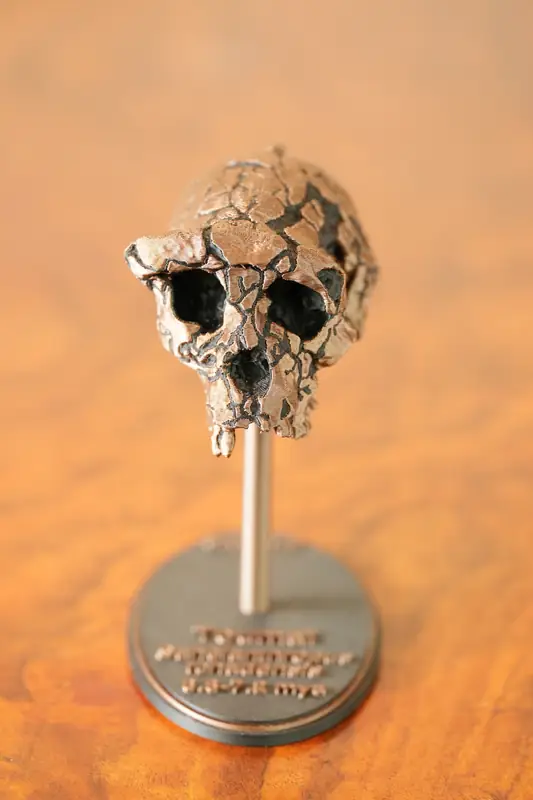
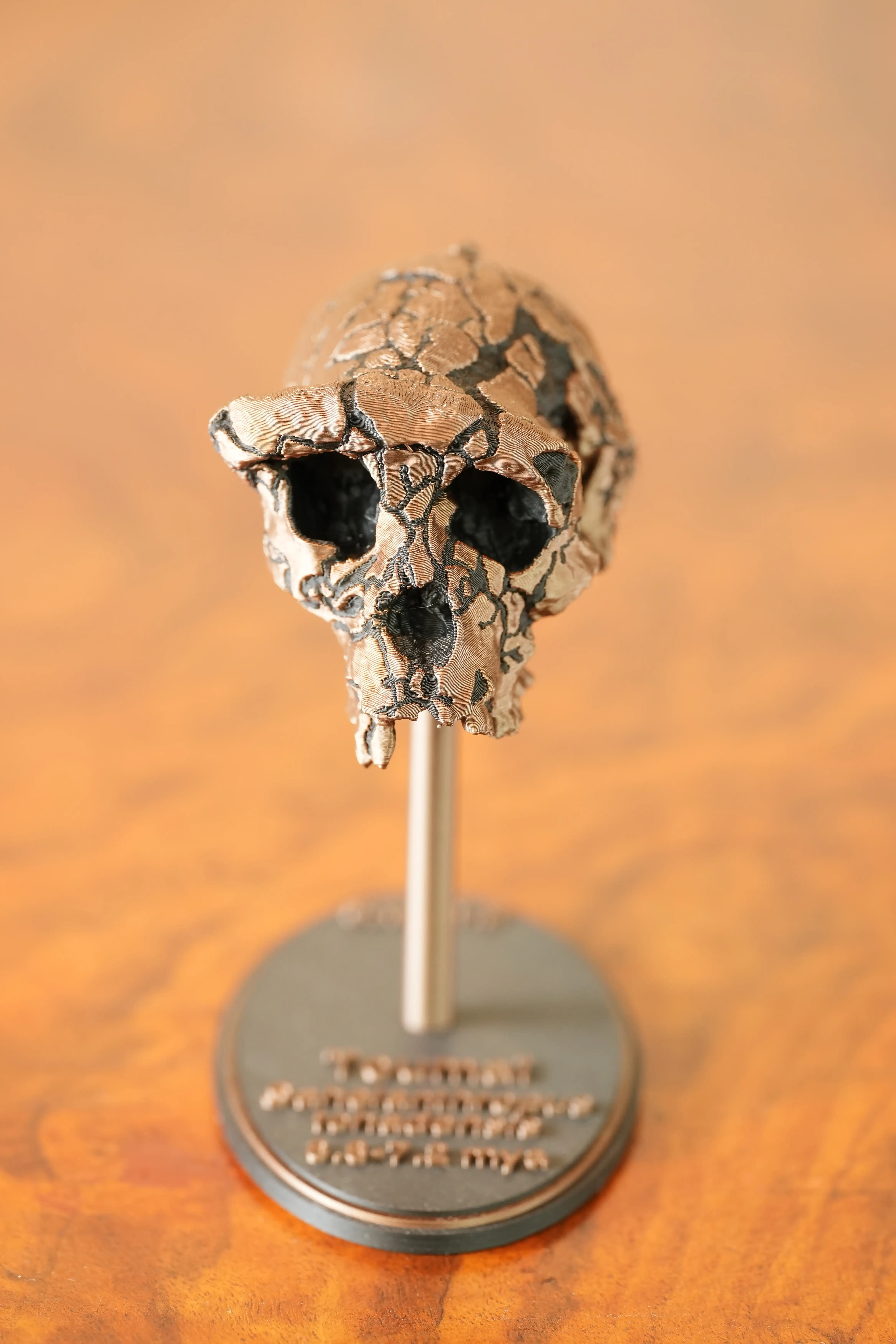
In July 2001, a small team on an unauthorized prospecting mission in Chad's Djurab Desert found a battered, blackened skull. Michel Brunet, director of the research program, had not sanctioned the expedition—but he named the specimen Toumaï ("hope of life") and announced it to the world as, "the ancestor of the whole of humankind!".
Why Toumaï Matters
At 6.8–7.2 million years old, Toumaï predates other early hominin candidates by roughly a million years. If it's a hominin, it's the oldest known member of our lineage—close to the estimated split from chimpanzees. Its location, 1,500 miles west of the Great Rift Valley, challenged the assumption that our origins were confined to East Africa.
Sahelanthropus Context
The skull displays a mosaic of features: a chimp-sized brain but a relatively flat face, reduced canines, and a non-honing dental complex, all traits associated with hominins. The foramen magnum position suggests an upright posture, though this remains contested.
Open Questions
Whether Toumaï walked upright matters: bipedalism is one of few criteria for identifying ancient hominins. Critically, a femur was found beside the skull but went unmentioned for years. In his Nature paper, Brunet wrote that no limb bones had been recovered. Then in 2004, master's student Aude Bergeret found it in the Poitiers lab—listed as "undetermined" and scheduled to be cut in half. When she identified it as primate, her research materials were confiscated. An adviser warned: "This piece—you forget you ever saw it." She was pushed out of the doctoral program.
The femur remained formally unpublished until 2020. Researchers split: a 2022 Nature paper argued it showed habitual bipedalism; a 2024 rebuttal found features "more similar to gibbons, orangutans, and gorillas." Whether the femur even belongs to Toumaï is unproven—it was nearby, not articulated. We still don't know if Sahelanthropus walked upright. Careers have been destroyed, teams fractured. They call it the cursed skull.