Discovery
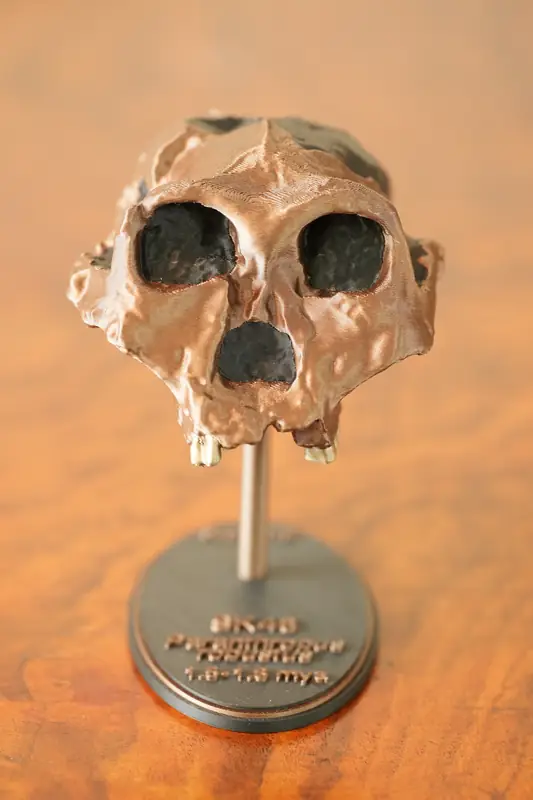
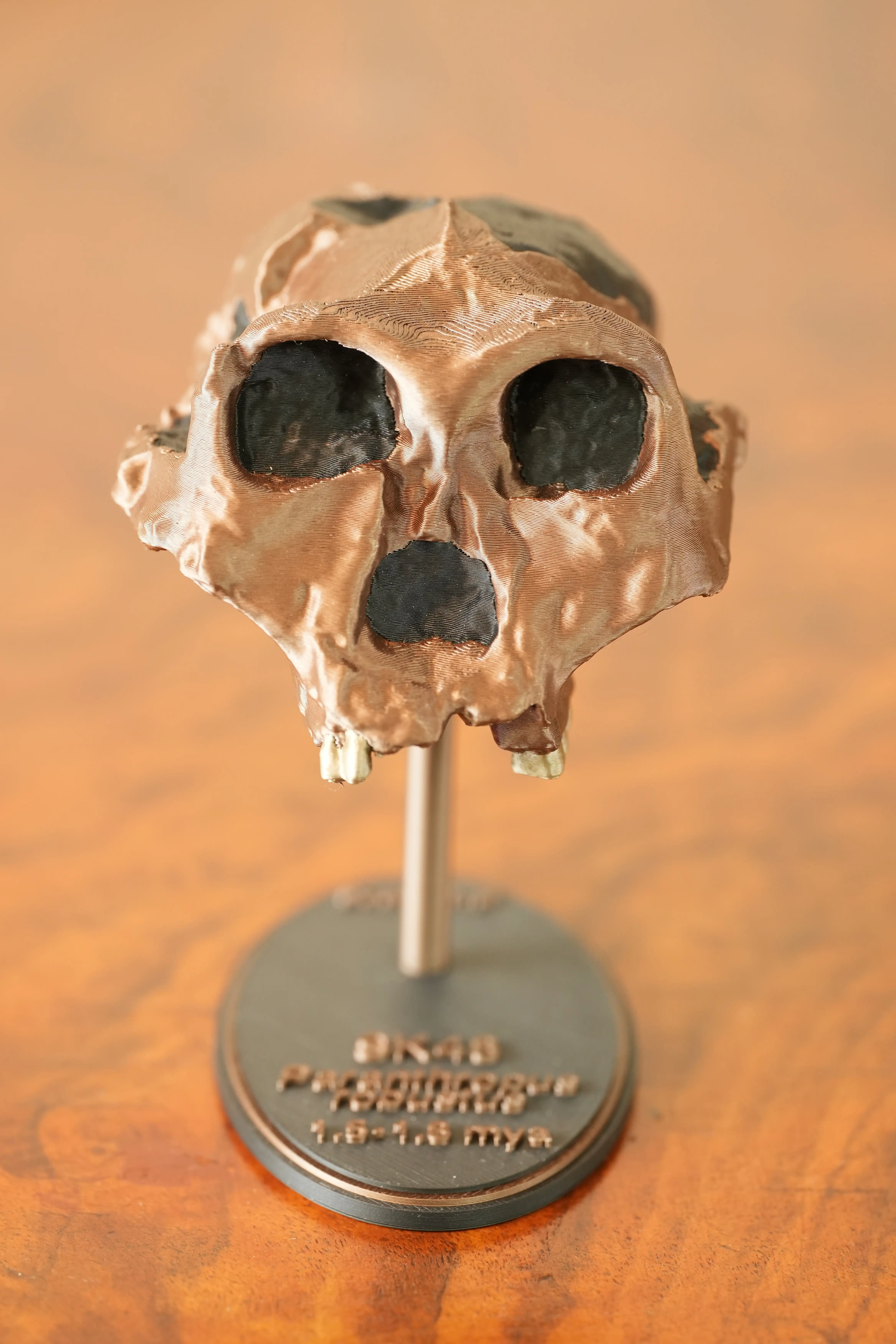
In 1950, Fourie pulled a skull from the rubble at Swartkrans Cave, a South African site which had been dynamited for lime mining. Although crushed, the skull was remarkably complete.
A year later, the lead of the dig, Robert Broom (the man who discovered the first adult Australopithecus and named P. robustus) made final edits to his paper on Swartkrans and SK 48...before dying later that evening. Raymond Dart, famous discoverer of the Taung Child, was among his pallbearers.
Why SK 48 Matters
SK 48 was the best-preserved robustus cranium for decades—face, cheekbones, and right dentition intact. It anchored our understanding of the species until more complete skulls emerged from Drimolen in the 1990s and 2010s.
P. robustus Context
Robustus is not a human ancestor but an evolutionary cousin—a side branch that lived alongside early Homo for over a million years before going extinct. They lived in South Africa roughly 2–1 million years ago. The skull is built for powerful chewing: a sagittal crest anchored massive jaw muscles, and the molars are large with thick enamel. Yet isotope and microwear studies suggest a flexible, omnivorous diet, perhaps with hard foods as a fallback.
Open Questions
Swartkrans yielded bone tools and early evidence of controlled fire—but both Paranthropus and Homo fossils appear in the same deposits. Who made the tools? The old assumption was Homo, but at Nyayanga, Oldowan tools appear alongside a Paranthropus molar with no Homo fossils present. And 2025 hand fossils from boisei confirm the anatomy for tool use was there.
Although Broom originally classified SK 48 as female based on its small sagittal crest, the 2020 DNH 155 discoveries suggest differences once attributed to sex may actually reflect rapid evolution in response to climate stress.
Perhaps most interestingly, why did robustus go extinct while Homo persisted? Climate shifts, dietary inflexibility, competition—all have been proposed, but the honest answer is we don't know.